
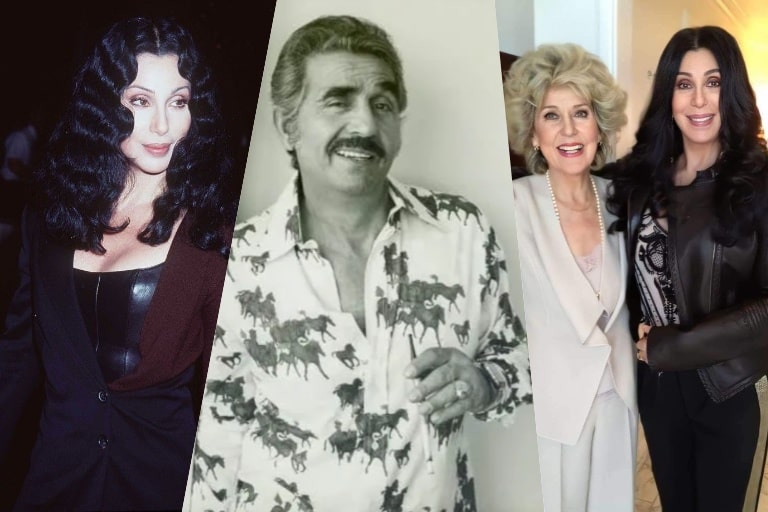
The Untold Story of John Paul Sarkisian: Beyond the Shadow of Cher
An Overlooked Patriarch in the American Mosaic
The story of John Paul Sarkisian unfolds as a quiet American counter-narrative to the deafening celebrity of his daughter, Cher. His life, often reduced to a footnote in entertainment history, represents the complex realities of working-class immigrant experience, post-war masculinity, and fractured family dynamics in mid-20th century America. To understand Sarkisian is to look beyond the glitter of fame and see the raw material from which icons are sometimes forged—not through guidance and presence, but often through absence and contrast.
Early Life and Armenian Roots
John Paul Sarkisian was born into a nation of immigrants finding its footing. While some records list his birthplace as Fresno, California, in 1926, others suggest Oakland, Alameda County, as his origin. This minor discrepancy reflects the limited documentation of ordinary lives, a theme that would follow Sarkisian throughout his existence.
He was the product of an Armenian-American family navigating the complexities of cultural identity in a new homeland. His father, George P. Sarkisian, was Armenian, and his mother, Blanch Dilkian, was reportedly of Turkish descent—a union representing the intricate demographics of the fading Ottoman Empire. The Armenian diaspora experience, marked by the shadow of genocide and the struggle for economic stability, formed the backdrop of his upbringing.
Sarkisian grew up in a working-class environment where survival, resilience, and hard work were paramount values. His father once purchased five trucks with the intention of helping John start his own business, a plan that unfortunately did not materialize as hoped. This glimpse into family investment and disappointment hints at aspirations that extended beyond mere subsistence.
The Tumultuous Union with Georgia Holt
The most defining romantic relationship of Sarkisian’s life began with a meeting at a donut shop in 1945. There, he encountered an 18-year-old Jackie Jean Crouch, who would soon reinvent herself as Georgia Pelham (later Georgia Holt), an aspiring actress and singer determined to escape her “Okie” origins.
Their connection was immediate and intense. Georgia was captivated by John’s suave looks and flamboyance, which contrasted with what she described as a “farmer’s attitude”. They married on June 22, 1945, in Reno, Nevada, when both were just 19 years old. From the beginning, their relationship was characterized by volatility. Some sources claim they broke up the day after their wedding, only to reconcile and separate repeatedly—a pattern that would define their connection.
The relationship reached a critical juncture when Georgia became pregnant. The couple initially decided on an abortion, but in a moment that would alter entertainment history, Georgia changed her mind at the clinic just minutes before the procedure. On May 20, 1946, their daughter Cherilyn (named in homage to actress Lana Turner’s daughter Cheryl) was born.
The marriage, however, could not withstand its foundational instability. Georgia noticed sudden mood swings in John and a change from his initially gentle demeanor. The relationship dwindled, and they divorced in 1947, less than a year after Cher’s birth.
Table: Key Details of John Paul Sarkisian’s Life
| Aspect | Details |
|---|---|
| Birth | 1926, California (Fresno or Oakland) |
| Heritage | Armenian-American (father Armenian, mother Turkish) |
| Marriage to Georgia Holt | June 22, 1945, in Reno, Nevada |
| Daughter Cher Born | May 20, 1946 |
| Divorce from Georgia Holt | 1947 |
| Professions | Truck driver, bartender, auto mechanic, hairstylist, horse breeder |
| Death | January 28, 1985, in Fresno County, California |
A Distant Father and Fractured Relationship
Sarkisian’s relationship with his famous daughter was defined more by absence than presence. After the divorce, Georgia and Cher moved frequently, making consistent contact difficult. Cher reportedly met her father for the first time when she was 11 years old. By then, she had already learned about him through a news report of his arrest when she was just eight.
Their paths crossed again in 1965 when Sarkisian, recently released from prison, remarried Georgia on December 15. Cher initially felt pleased to have both parents together, but this reunion was short-lived. Sarkisian reportedly reverted to “self-destructive” behavior, and Cher disowned him after just six months.
The father-daughter relationship reached its legal nadir when Sarkisian sued Cher and two tabloids for $4 million over statements he felt damaged his reputation. In this suit, he admitted to past imprisonment for drug and bad-check violations but claimed to have led an “exemplary, pious, and noble life” in recent years. He attributed his earlier addiction to pain medication following a medical condition.
In a particularly painful episode, Sarkisian sold a photograph of himself with Cher and her granddaughter to a rug dealer to cover a bad check—an act that led Cher to vow no further contact. Despite this estrangement, Georgia Holt believed her ex-husband profoundly influenced their daughter’s life, noting that both Sarkisian and Sonny Bono (Cher’s first husband and musical partner) shared similar height and build. Georgia even suggested this subconscious resemblance might have been why Cher was drawn to Sonny, who was 12 years her senior.
Professional Life and Personal Struggles
Sarkisian’s career path reflected the economic realities of many working-class men in post-war America. After serving in World War II, he worked primarily as a truck driver, a profession characterized by long hours, inconsistent income, and social isolation. This occupation represented a stark contrast to the glamour his daughter would later inhabit.
Beyond trucking, Sarkisian held an assortment of jobs including bartender, auto mechanic, hairstylist, and horse breeder. This professional versatility suggests a man continuously seeking his footing in an uncertain economy. The seasonal nature of some work, such as delivering produce, further indicates a life of economic precarity.
Sarkisian’s personal struggles were significant and contributed to his familial estrangement. Public records and family accounts point to challenges with gambling addiction and substance abuse. These struggles occurred in an era when addiction was poorly understood and rarely treated with compassion or effective professional support.
Legacy and Cultural Impact
John Paul Sarkisian died on January 28, 1985, in Fresno County, California, at age 58. His passing received little public attention, consistent with the private life he maintained despite his connection to one of the world’s most famous women.
His legacy exists primarily through biological and cultural inheritance rather than direct influence. Cher has openly acknowledged her Armenian heritage through her father’s line, embracing this aspect of her identity despite their troubled relationship. This connection represents one of the complex ways parental influence can manifest—sometimes through deliberate teaching, other times through genetic and cultural legacy.
Perhaps Sarkisian’s most profound impact was through absence rather than presence. Cher’s development into a fiercely independent, resilient icon was undoubtedly shaped by navigating childhood without consistent paternal support. In interviews, Cher has described building her career despite feeling “unattractive and untalented” in her youth—a insecurity she overcame through sheer determination.
The Uncelebrated Life in the Shadow of Fame
The story of John Paul Sarkisian raises compelling questions about how we value lives in a culture obsessed with celebrity and achievement. His narrative represents the millions of ordinary lives that form the foundation upon which extraordinary stories are built but rarely receive documentation or analysis.
In contemporary discourse where every aspect of celebrity lives is scrutinized, Sarkisian maintained a remarkable degree of privacy. He never authored tell-all books, granted interviews about his famous daughter, or attempted to capitalize on her success. This detachment from the fame ecosystem makes him an anomaly in an age where familial connection to celebrity is often treated as a form of social capital.
Sarkisian’s Armenian-American identity also provides a window into the immigrant experience in mid-20th century America. The Armenian diaspora, with its history of trauma and resilience, represents just one of countless ethnic narratives woven into the American tapestry but often overlooked in mainstream historical accounts.
Conclusion: Understanding the Full Human Tapestry
John Paul Sarkisian’s biography matters not because he fathered a celebrity, but because his life represents the complex, unvarnished realities of countless individuals who navigate challenges of addiction, economic instability, and fractured relationships. His story reminds us that behind every icon is a web of human connections—some nurturing, some fraught—that collectively contribute to the person the world eventually sees.
In examining Sarkisian’s life, we confront the uncomfortable truth that influence within families is not always positive or intentional. Sometimes a parent’s legacy is shaped by the void they leave rather than the guidance they provide. Sometimes cultural inheritance flows through bloodlines despite broken relationships. And sometimes the most ordinary lives, when examined with empathy and depth, reveal the rich complexities of the human experience that fame often obscures.
The quiet truck driver from California, with his Armenian heritage, his assortment of jobs, his personal struggles, and his famous daughter, represents a particular strand of the American story—one of immigration, adaptation, aspiration, and limitation. His biography, finally considered on its own terms rather than as a footnote to Cher’s legend, adds depth to our understanding of how ordinary and extraordinary lives intersect in the making of cultural history.