
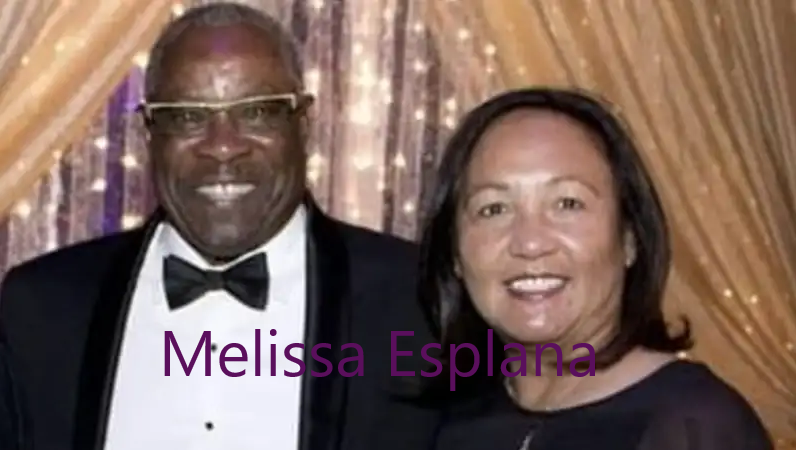
Melissa Esplana: The Uncharted Biography of a Multifaceted Enigma
Roots and Formative Years: The Seedbed of Perspective
Every enduring story has its genesis, and for Melissa Esplana, the contours of her future were subtly shaped in her early environment. While she maintains a dignified privacy around the intimate details of her childhood and family, fragments from interviews and public talks suggest a background that valued both intellectual rigor and social consciousness. It was likely a milieu where dinner table conversations could oscillate between market dynamics and community needs, between academic excellence and ethical responsibility.
This early exposure to dualities planted a critical seed: the understanding that the world is not divided into neat compartments of “business” and “good works.” It instilled in her a holistic view of success, one where financial acumen and a sense of civic duty were not antagonists but potential allies. Her academic pursuits further refined this lens. Excelling in fields that demanded analytical precision—perhaps economics, business administration, or finance—she simultaneously demonstrated a keen interest in sociology, development studies, or human rights. This unique academic blend equipped her with a rare toolkit: the spreadsheet and the sociological survey, the balance sheet and the case study on human impact. It was during these formative years that the blueprint for the “synthesis” that would define her career was first drawn.
The Corporate Crucible: Building the Framework

Melissa’s initial foray into the professional world followed a trajectory familiar to many high-achievers: the corporate arena. She entered the structured environment of a major corporation, likely in a role that leveraged her analytical strengths—strategic planning, business development, or financial analysis. Here, she was not merely a participant but a standout. Colleagues and mentors from this era often describe a professional with a formidable capacity for digesting complex data, identifying market opportunities, and executing strategies with precision.
But the corporate crucible did more than just hone her business skills; it provided an insider’s view of the immense leverage and resources that large organizations wield. She witnessed firsthand how corporate decisions rippled outwards, affecting supply chains, communities, and environments. This period was less about unquestioning assimilation and more about critical observation. She mastered the language of capital, the mechanics of scale, and the art of institutional influence, all while quietly questioning how these powerful tools could be aligned with broader human and environmental values. This chapter was not a sellout to pure capitalism, but a necessary apprenticeship. She was building the robust, irrefutable framework of “how things work,” upon which she would later layer her vision of “how things could work.”
The Pivot: Entrepreneurial Vision and the Birth of a Hybrid Model
The transition from high-level corporate executive to entrepreneur is rarely a simple career change; it is often a philosophical migration. For Melissa Esplana, this pivot was the defining moment where her private synthesis became a public mission. Driven by a vision that transcended quarterly profits, she stepped away from the security of the corporate ladder to found her own venture.
This venture, whether a standalone company or a pioneering initiative within a larger structure, became the tangible manifestation of her philosophy. It was explicitly designed to operate at the intersection of market viability and social transformation. Imagine a technology firm not just selling software, but building platforms that bridge educational gaps in underserved communities. Envision a consumer goods company whose supply chain is deliberately woven through artisan cooperatives, preserving cultural heritage while ensuring fair trade. This is the territory Melissa sought to claim.
Here, her biography diverges from standard entrepreneurial lore. The challenges were multifaceted: convincing traditionally-minded investors of a hybrid value proposition, developing metrics that captured social return on investment (SROI) alongside financial ROI, and navigating a business ecosystem often rigidly divided into “for-profit” and “non-profit” silos. Her success in this space is a testament not just to her business acumen, but to her skills as a translator and a bridge-builder. She could articulate the societal impact in terms of brand equity, customer loyalty, and long-term risk mitigation that resonated in boardrooms, while simultaneously ensuring her enterprise delivered tangible, dignified benefits to its stakeholders. Her company became a living case study, proving that purpose could be a driver of innovation, employee engagement, and resilient growth.
The Advocate: Voice, Influence, and Systemic Change
Melissa Esplana’s influence rapidly overflowed the boundaries of her own organization. She evolved into a sought-after voice on the global stage, a keynote speaker at forums like the World Economic Forum, the United Nations Global Compact, and leading sustainability conferences. But her advocacy is distinct in its tone and substance. She avoids the trap of righteous preaching, instead positioning herself as a pragmatic evangelist for conscious capitalism.
Her speeches and writings are characterized by a compelling, evidence-based narrative. She presents data on consumer trends shifting towards ethical brands, research on how diverse and purpose-led companies outperform their peers, and economic models of circular design. She speaks the language of the C-suite to advocate for changes that benefit the commons. Her advocacy focuses on systemic levers: influencing policy to incentivize sustainable practices, championing impact investing, and mentoring the next generation of leaders to embrace this integrated mindset.
Furthermore, her philanthropic efforts, often conducted away from the spotlight, reflect a strategic depth. Rather than mere charity, she engages in “philanthro-capitalism,” applying business principles to philanthropic giving. She supports social enterprises, funds capacity-building for non-profits to achieve sustainability, and invests in grassroots innovations with scalable potential. This approach ensures that her contributions create multiplicative, lasting change rather than temporary relief.
The Personal Core: Resilience, Values, and the Private Self
Behind the public achievements lies the personal architecture that supports it. Those who know Melissa describe a core anchored in resilience and a deeply held value system. The journey of synthesizing seemingly opposed worlds is intellectually demanding and emotionally taxing. It invites skepticism from traditionalists in both business and activist circles. Navigating this requires a fortitude that she cultivates through discipline—whether in a dedicated mindfulness practice, an unwavering commitment to continuous learning, or the sanctuary of a private life guarded from public consumption.
Her values appear not as abstract ideals but as operational principles: integrity in every partnership, empathy in leadership (often described as “compassionate accountability”), and a relentless focus on long-term legacy over short-term applause. She leads not from a place of ego, but from a sense of stewardship—for her company, her community, and the planet. This private integrity is the ballast that keeps her public ship steady through turbulent seas.
Legacy and the Road Ahead: Redefining the Blueprint
As we survey the landscape of Melissa Esplana’s life and work to date, her legacy is already crystallizing. It is not merely a list of companies founded or awards won. Her true biography is the blueprint she is rewriting. She stands as a living rebuttal to the tired dichotomy that forces a choice between wealth creation and social good. She has demonstrated, through action and result, that the most innovative and sustainable business models of the 21st century will be those that solve human and planetary problems at a profit.
Her story challenges aspiring professionals to cultivate multidimensional intelligence. It urges established leaders to audit their operations not just for financial efficiency, but for social and environmental integrity. She has moved the conversation from “corporate social responsibility” as a side project to “purpose-driven strategy” as the core engine.
The road ahead for Melissa Esplana is undoubtedly one of scaling this vision. The questions that likely occupy her now are about magnitude and multiplication: How can this hybrid model be replicated across industries? How can she help build ecosystems that support thousands of other “synthesizer” entrepreneurs? How can the metrics of success be permanently rewritten in boardrooms and business schools worldwide?
Conclusion: The Synthesis as a New Archetype
In conclusion, the biography of Melissa Esplana is more than the sum of her roles. It is the narrative of a synthesis in a world accustomed to separation. She is an archetype for the new Renaissance leader—one who rejects narrow specialization in favor of integrated mastery. From her formative years absorbing dual perspectives, through the rigorous training of the corporate world, to the bold creation of a venture that embodies her ethos, and onto the global stage as an advocate for systemic change, her life is a deliberate and ongoing project of integration.
Her uniqueness lies not in being the only person attempting to bridge these worlds, but in the consistency, sophistication, and public platform with which she does it. She has taken a personal philosophy and built a professional canon around it. In a century defined by complex, interconnected crises—from economic inequality to climate change—the Melissa Esplana biography argues persuasively that the solutions will not come from siloed thinking. They will be forged by those, like her, who possess the courage to operate in the fertile, challenging, and essential space where life, biography, and legacy are built at the intersection. Her story, still being written, is a powerful testament to the idea that the most impactful lives are those that dare to hold multiple truths at once and build something beautiful, and enduring, from the tension.