
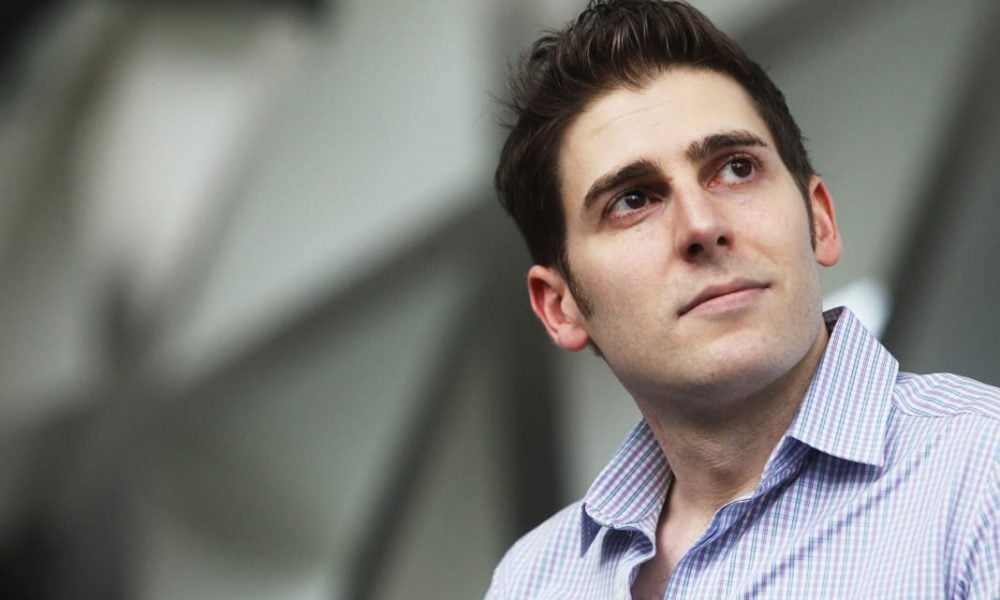
Eduardo Saverin: From Facebook’s Betrayed Co-Founder to Singapore’s Quiet Investment Titan
The Legacy Beyond the Screen
Eduardo Saverin’s story is one of Silicon Valley’s most compelling narratives—a tale of meteoric success, shocking betrayal, and quiet rebirth. While the world knows him as the Harvard student who helped Mark Zuckerberg launch Facebook only to be dramatically pushed out of the company, his subsequent journey reveals a far more sophisticated evolution. Today, Saverin has transformed from a footnote in Facebook’s origin story into a strategic powerhouse in global venture capital, making him Singapore’s wealthiest resident with an estimated net worth of $66.6 billion. His trajectory offers not just a cautionary tale about startup partnerships but a masterclass in rebuilding and redirecting monumental wealth and influence toward new frontiers.
Early Brilliance: The Making of a Prodigy
Long before Facebook entered the cultural lexicon, Eduardo Luiz Saverin displayed the financial acumen that would characterize his career. Born in São Paulo, Brazil, in 1982 to a prosperous family, Saverin moved to Miami at age eleven. His intellectual curiosity was evident early on. At Harvard University, he majored in economics and served as president of the Harvard Investment Association. Demonstrating remarkable initiative, he combined an interest in meteorology with financial markets, analyzing hurricane patterns to successfully invest in oil futures and reportedly earning $300,000 while still an undergraduate. This unique blend of analytical skill and risk-taking foreshadowed the role he would soon play in one of history’s most consequential startups.
The Facebook Crucible: Partnership and Estrangement
The pivotal chapter of Saverin’s life began in a Harvard dormitory in 2004. Meeting fellow student Mark Zuckerberg, Saverin recognized the potential in Zuckerberg’s idea for a university-exclusive social network. He provided crucial early capital, investing an initial $1,000 followed by another $18,000, becoming the fledgling company’s chief financial officer and business manager. The original ownership split was clear: Zuckerberg held 65%, Saverin 30%, and Dustin Moskovitz 5%.
However, the founders’ divergent paths soon created an irreparable rift. While Zuckerberg and the core team moved to Palo Alto to pursue rapid, venture-backed growth, Saverin remained in New York for a summer internship, focusing on securing advertising deals. This physical and philosophical separation was exploited by new advisor Sean Parker, who viewed Saverin as uncommitted to the Silicon Valley scale-up ethos.
The betrayal was methodical and devastating. Under the guise of restructuring for a new investment from Peter Thiel, Zuckerberg asked Saverin to temporarily surrender his voting rights. Unaware of the trap, Saverin signed, after which Zuckerberg issued millions of new shares to himself and other allies, diluting Saverin’s stake from 30% to less than 0.5%. In a brutally candid email, Zuckerberg wrote, “I’m just going to cut him out and then settle with him”. Saverin was systematically erased—his company email deactivated and his name removed from the masthead.
The ensuing legal battle culminated in a 2009 out-of-court settlement. While terms were confidential, Saverin’s status as a co-founder was reaffirmed, and he retained a stake then estimated at around 5% of the company. This stake, though a fraction of his original share, would become the foundation of an immense fortune.
Key Moments in the Facebook Founding Saga
| Date | Event | Outcome for Saverin |
|---|---|---|
| Feb 2004 | TheFacebook.com launches with Saverin as CFO. | Holds a 30% stake in the new company. |
| Summer 2004 | Team moves to Palo Alto; Saverin stays in New York. | Growing strategic and physical divide from Zuckerberg. |
| Early 2005 | Signs over voting rights for “restructuring.” | Unknowingly enables the dilution of his ownership. |
| Apr 2005 | Sues Facebook for fraud and breach of contract. | Begins a four-year legal battle for recognition and equity. |
| 2009 | Reaches an out-of-court settlement with Facebook. | Retains a ~5% stake and official “co-founder” title. |
| May 2012 | Facebook IPO priced at $38 per share. | Remaining stake begins its journey to tens of billions in value. |
Strategic Reinvention: Building B Capital in Asia
Following the settlement, Saverin made two life-altering decisions. First, in 2009, he moved to Singapore, attracted by its strategic position as a gateway to Southeast Asia’s booming economies. Second, in 2011, he renounced his U.S. citizenship, a move that sparked controversy and allegations of tax avoidance, though he maintained it was due to his “interest in working and living in Singapore”. Analysts estimated the decision saved him approximately $700 million in potential capital gains taxes.
In Singapore, Saverin embarked on his second act. In 2015, he co-founded B Capital with Raj Ganguly, a former Bain Capital executive. Unlike his informal beginnings with Facebook, B Capital was built with deliberate structure and global ambition. The firm leverages a strategic partnership with the Boston Consulting Group (BCG), giving it unique insights into corporate challenges and a pipeline to later-stage investment opportunities.
B Capital has grown into a multi-stage global investment firm with a formidable presence. As of late 2025, it manages over $9 billion in assets across a family of funds focused on three core sectors: Technology & AI, Healthcare, and Climate Tech. The firm’s strategy exemplifies Saverin’s learned sophistication:
-
Sector Specialization: It runs dedicated funds like the $500 million Healthcare Fund I, targeting everything from digital health to biotechnology.
-
Stage Flexibility: It invests across the lifecycle, from early-stage “Ascent” funds to late-stage “Opportunities” funds. In March 2024, it closed a $750 million Opportunities Fund II for follow-on investments in its best-performing companies.
-
High-Profile Leadership: Saverin has recruited top talent like former Goldman Sachs veteran Sheila Patel and climate investing expert Jeff Johnson from Temasek to steer the firm’s expansion.
The Quiet Titan: Wealth, Influence, and Life in Singapore
Eduardo Saverin’s financial status is a direct reflection of his dual legacy. The vast majority of his wealth—estimated at $66.6 billion as of October 2025—still derives from his residual Meta (Facebook) stake, which has soared alongside the company’s ad-driven profits. This fortune has made him not only the wealthiest person in Singapore but also the richest Brazilian-born individual in the world.
His lifestyle in Singapore is one of affluent privacy. He married Elaine Andriejanssen in 2015, and they have one child. His real estate investments reflect his stature, including a $167 million two-acre estate in one of Singapore’s most exclusive neighborhoods. Beyond accumulation, he has engaged in philanthropy, such as donating $15 million to the Singapore American School.
Perhaps most telling is Saverin’s deliberate silence. In stark contrast to the very public persona of his former partner Mark Zuckerberg, Saverin has never publicly criticized Zuckerberg or re-litigated their fallout. He grants few interviews and maintains a low profile, focusing on his work at B Capital and his family. This discretion has allowed him to craft a narrative defined not by a single, painful chapter from his youth, but by his subsequent, self-directed success.
The Saverin Legacy: Lessons in Resilience and Strategy
The arc of Eduardo Saverin’s career offers profound lessons for entrepreneurs and investors:
-
The Compound Value of a Settlement: While losing the majority of his Facebook equity was a catastrophic financial blow at the time, the retained stake from the 2009 settlement became one of the most valuable assets in history. It provided the unparalleled capital base for his venture capital ambitions.
-
Geographic Strategy as a Competitive Advantage: His early move to Singapore was prescient. He positioned himself at the heart of Asia’s growth story years before many Western investors fully appreciated the region’s potential, giving B Capital a foundational advantage.
-
Institutionalizing Venture Capital: Learning from the informal, trust-based handshake that failed him at Facebook, Saverin built B Capital with formal partnerships, dedicated sector funds, and institutional rigor. He turned the painful lesson of his dilution into a professionalized investment operation.
-
Peace Over Notoriety: In choosing privacy and strategic focus over public feuds or legacy-defining, Saverin secured a form of victory distinct from Zuckerberg’s. As one commentary noted, “Zuckerberg won Facebook. But Saverin walked away with something Zuckerberg never will: Peace of mind“.
Conclusion: The Architect of His Own Destiny
Eduardo Saverin’s story transcends the dramatic betrayal immortalized in The Social Network. He is no longer merely the “other Facebook founder.” He is a case study in resilient reinvention. By channeling the resources from his first act into a carefully constructed second act, he evolved from a sidelined co-founder into a principal architect of global capital flows into transformative technology. His journey from a Harvard dormitory to a boardroom in Singapore illustrates that even the most brutal professional setbacks can become the foundation for a quieter, perhaps more sustainable, form of empire-building. In the volatile theatre of tech wealth and fame, Eduardo Saverin has written his own sequel—on his own terms.